- March 13, 2022
- Posted by: novatest
- Categories:
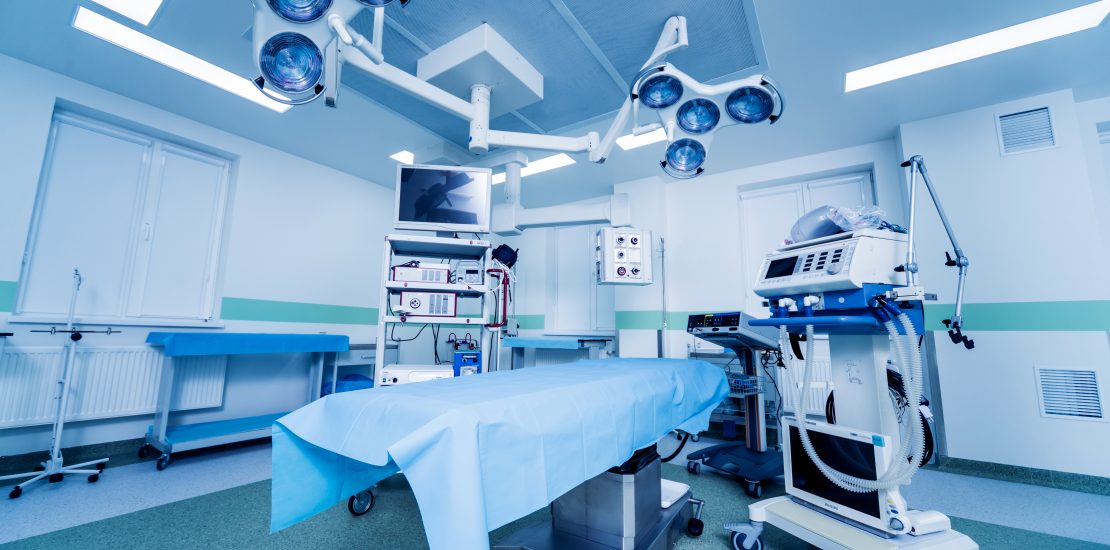
In hospital areas;
- operating rooms and intensive care units
- sterile and semi-sterile areas.
- tpn units
- chemotherapy units
- sterilization units etc.
Performance tests are of vital importance in order to ensure the life safety of the patient and to avoid a negative process after the operation.
TESTS PERFORMED WITHIN THE SCOPE OF THE SERVICE
Calculation of Air Flow, Air Velocity and Air Exchange Numbers: The purpose of these tests is to determine the air flow rates and the air flow rates provided in hospital sterile areas. With this test, the flow of air provided in hospital sterile areas without one-way air flow and the distribution of air velocity in hospital sterile areas with one-way airflow are calculated. Generally, air velocity or air flow is measured and the results of these measurements are recorded in the form of average velocity, average air flow or total air exchange. Total airflow is used to calculate the number of air changes (air changes per hour) in hospital sterile areas without one-way airflow. Air velocity is calculated by measuring in Clean rooms with unidirectional air flow. Measurement of Air Flow, Air Velocity and Uniformity test is carried out in accordance with ISO 14644-3:2005, DIN 1946-4.
HEPA Filter Leakage Test (DOP Test): By-pass leaks, filter failure status (small holes and other damages that may occur on the filter surface and frame connections), filter leaks (by-pass leaks, which affect the cleaning success of the system where the HEPA filter tightness test is installed), filter leaks (by-pass leaks consisting of filter frame and sealing elements). -Detects pass leaks and other leaks from the filter surface). These tests do not check the efficiency of the installed filter. These are the tests performed by taking samples from the air outlet of the filter, the connection frame of the filter, or if the duct continues after the filter, after the particles (aerosol) are given to the air flow direction of the filters. HEPA filter tightness test In clean rooms and clean areas, after the connection of all devices (as-built) and after the completion of all equipment and items, during unmanned operation (at-rest), in existing systems that are already running and have come to test, or in the final stage will be applied when filters are changed. Hepa Filter Equipment (DOP) Leakage Test is performed in accordance with ISO 14644-3:2005, DIN 1946-4.
Measurement of Pressure Difference: The purpose of this test is to determine the success of the entire system in maintaining the pressure difference between the other areas surrounding it in the hospital sterile areas. The Air Pressure Difference Measurement Test can only be applied after the system installed in Clean areas provides Air Flow Rate, Air Flow Flow Rate, Air Flow Uniformity (Uniformity) and other applicable tests. This test can be applied in at-rest and in operational phases after all devices are connected (as-built), after all equipment and goods are completed.
Measurement of Pressure Difference Test is performed in accordance with ISO 14644-3:2005, DIN 1946-4.
Temperature and Humidity Measurement:
Temperature Measurement:
The purpose of Temperature Measurement is to document and verify the success of air-conditioning systems installed for clean rooms and clean spaces in maintaining the air temperature level for the required period of time. Temperature Measurement Test is carried out in accordance with ISO 7726, ISO 14644-3:2005, DIN 1946-4.
Humidity Measurement:
The purpose of Humidity Measurement is to document and verify the success of air conditioning systems installed for clean rooms and clean spaces in maintaining the humidity level of the air (called relative humidity or dew point) for the required period of time for a given space. Humidity Measurement Test is carried out in accordance with ISO 7726 ISO 14644-3:2005, DIN 1946-4.
Particle Measurement / Counting: Particle Measurement It is applied to determine the air cleanliness class in clean rooms and clean areas. Particle Measurement test method In clean rooms and clean areas, particle measurement (measurement of particle concentration) with a size range of 0.1 μm to 5 μm and classification of these areas according to the number of particles obtained. Particle Count Testing and Classification of the Clean Room can be applied in the at-rest and in-operation phases after all devices are connected (as-built), after all equipment and items are completed. The particle count tests to be performed are carried out in accordance with the required periods (periods) specified in ISO 14644-2:2015 in order to document and verify the cleanliness classification of the relevant Cleanroom and clean areas according to ISO14644-1:2015.
Determination of the number of sampling points required for Particle Measurement, determination of the location of sampling points, determination of the clean room class and the amount of measurements required are made according to the table in the ISO 14644-1:2015 standard.
Decontamination (Recovery) Test: The purpose of the Decontamination Recovery Test is to document and record the success of eliminating particles (particles) floating in the air of the setups established for clean rooms and clean areas. The success of recovering cleanliness after particle production is one of the most important capabilities of Cleanrooms. The Decontamination Recovery Test is only important for Cleanrooms without one-way air flow, because recovery success is a function of re-circulated air rate, inlet-outlet airflow pattern, thermal conditions, and air distribution characteristics in Cleanrooms, whereas unidirectional airflow is a function of Pollution can be removed with controlled air flow in Cleanrooms with air flow, so the recovery time is a function of location and distance in these areas with one-way air flow.
The decontamination recovery test should be performed at the at-rest stages, after all devices have been connected (as-built), after all equipment and items have been completed. This test is not recommended for ISO 8 and 9 classes. Decontamination Recovery test is carried out in accordance with ISO 14644-3:2005. Decontamination Recovery Test is carried out in accordance with ISO 14644-3:2005, DIN 1946-4.